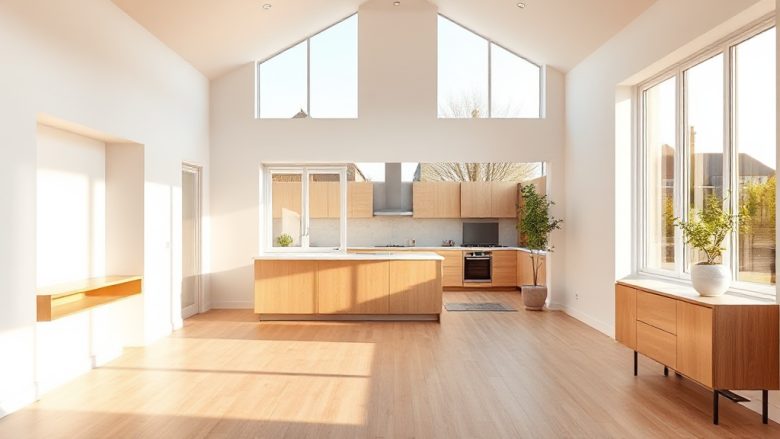
The renovations that add value are the ones that fix a problem buyers already see: layout, light, storage and condition. Everything else is a judgement call. If a room feels cramped, dark, cluttered or tired, a buyer mentally deducts the cost of sorting it out and then some. If you sort it out first, you get to set the price rather than negotiate against a defect.
That is the whole framework in one sentence. Value comes from removing objections, not from adding features. A new kitchen island with a wine fridge is lovely, but it will not move a valuation the way a second bathroom or a properly tanked cellar will. When people search for home renovation ideas that add value, they usually get lists of pretty projects. What they need is a way to rank those projects by what a surveyor, an estate agent and a buyer will each think. That is what follows.
How to rank renovation ideas by the value they actually add
Before you book a builder, run every idea through four questions. First, does it fix something a buyer would have to fix anyway? Structural movement, damp, a leaking roof, old wiring, a boiler on its last legs. These are not glamorous, but they are the highest-return category because every buyer will price them in. Second, does it change how the space is used? Adding a bedroom, a bathroom or a usable office changes the buyer pool entirely. Third, does it improve the feel of the house in photographs and viewings? Light, flow and storage do this cheaply. Fourth, is it reversible or personal? A hand-painted mural is neither. A plain neutral kitchen is both.
Cost matters, but not in the way most people assume. The return is rarely the full spend. A realistic rule is that you recover a decent proportion of a well-executed, well-chosen project, and close to nothing on a poorly-chosen one. The table below is a rough ranking rather than a promise, because labour rates, house type and local demand all pull the numbers around. Treat it as a way to sort your list, not a valuation.
| Renovation | Typical cost band | Value signal to buyers | Priority |
|---|---|---|---|
| Fixing damp, roof, wiring, heating | Low to high, depends on scope | Removes the biggest objection | First |
| Adding a second bathroom or shower room | Medium to high | Changes who can buy the house | First |
| Improving layout and flow | Medium | Makes rooms feel bigger without an extension | High |
| Kitchen refresh, not a rebuild | Low to medium | Signals a well-kept home | High |
| Storage, light and neutral decoration | Low | Photographs and viewings improve | High |
| Loft or garage conversion | High | Adds usable square footage | Medium |
| High-end finishes, bespoke joinery, feature walls | Medium to high | Personal taste, often ignored | Low |
Notice where the money sits. The top of the table is unglamorous and the bottom is where most renovation budgets actually go. That gap is why some sellers spend forty thousand pounds and see almost no uplift, while others spend eight and see a clear jump.
The five changes that reliably move the needle
If you want a shortlist, this is it. These are the home renovation ideas that add value across most house types, most price brackets and most local markets.
One: put the problems right. Get a surveyor or a good builder to walk the house and list every defect, then fix them in order of severity. Rising damp, a sagging roof line, an old fuse board, a boiler that cannot be serviced. Buyers and their lenders care about these more than they care about your choice of tile. A house with a clean bill of health sells faster and holds its price in a negotiation.
Two: add a bathroom or a shower room. The jump from one bathroom to two changes the buyer pool from couples to families. Even a well-planned shower room squeezed into a generous cupboard or under the stairs can do it. This is often the single highest-value structural change you can make, and it is far cheaper than an extension.
Three: fix the layout. Knocking through a wall to connect a cramped kitchen to a dining room, widening a doorway, or turning a corridor into usable space makes the whole house feel larger. Buyers do not measure square metres; they feel flow. A house that moves well from front door to garden feels more expensive than it is.
Four: refresh the kitchen and bathroom rather than replacing them. New doors, handles, worktops, a re-seal and a deep clean can transform a dated kitchen for a fraction of a rebuild. Unless the existing one is genuinely falling apart, a full replacement rarely returns what it costs. Buyers want clean, functional and neutral, not a showroom.
Five: light, storage and neutral paint. This is the cheapest value on the list. Replace heavy curtains with something that lets light in, add fitted wardrobes where clutter currently lives, paint the whole house in one warm neutral, and fix the small stuff. Squeaky doors, cracked tiles, tired grout, a broken gate. These details set the tone in every viewing and cost very little.
What to avoid, and why the local market decides the rest
The renovations that do not add value are the ones that only you would want. A loft room with no building regulations sign-off is worse than no loft room, because buyers will discount it and lenders may query it. A swimming pool in a street of small terraces is a liability. A garage converted into a gym is a gamble unless the next buyer wants a gym. Bold colours, expensive wallpaper, ornate tiling and bespoke storage built for your exact possessions all read as work the buyer will have to undo.
There is also a ceiling effect. On a street where every house is the same, spending far more than the local top price rarely pays back. You cannot out-renovate the road. Before you commit, find out what similar houses nearby actually sold for, not what they were listed at, and what the strongest ones had that yours does not.
Local demand matters more than any generic ranking. In a town where families are the buyers, a fourth bedroom and a second bathroom win. In a city centre where renters and young professionals dominate, a well-fitted home office and a decent shower beat a garden room every time. Talk to two or three local estate agents and ask them plainly which single change would add the most to your specific house. Their answer will be more useful than any list, including this one.
If you are renovating to sell, the safest strategy is to fix what is broken, improve what is dark or cramped, keep every finish neutral, and stop there. If you are renovating to stay, the calculation changes and personal taste becomes a perfectly good reason to spend. Just be honest about which one you are doing. The value-adding work is rarely the fun work, but it is the work that pays you back when the surveyor, the buyer and the lender all nod in agreement.