Dressing well on a budget is not about buying less; it is about buying the right three things first: fit, fabric and a colour palette that works together. Get those right and a rail of inexpensive clothes starts to look deliberate. Get them wrong and even expensive pieces hang awkwardly and go unworn. Learning how to dress well on a budget is mostly a sorting exercise, not a shopping one.
Most people who look consistently put-together are not spending more than you. They are spending in a different order. They fix the hem before they buy the jacket. They check the label before they check the price tag. They buy clothes that match what they already own instead of clothes that match a mood on a Tuesday afternoon.
So here is the spending hierarchy, in the order it actually pays off: fit first, fabric second, colour third, cost-per-wear as the deciding vote. Everything else, from sales to secondhand finds, is just a way of applying those four things more cheaply.
The three rules: fit, fabric and a palette that works together
Start with fit, because it is the cheapest thing to change. A ten-pound shirt that sits properly on your shoulders will outperform a fifty-pound shirt that pulls across the chest. Most high street sizes are cut for an average that almost nobody is, so assume nothing fits perfectly off the rail. Assume it needs one small adjustment.
Shoulders are the one measurement you cannot fake. A tailor can take in a waist, shorten a sleeve or lift a hem, but rebuilding a shoulder line costs more than the garment. If the shoulder seam sits past your natural shoulder, put it back. If it sits inside it, put it back too. Everything below the shoulder is negotiable.
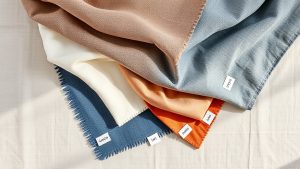
Fabric comes next, and it is where budget shopping quietly separates itself. Thin, shiny synthetics crease badly, hold onto smells and go bobbly after a few washes. Denser cotton, wool blends with a bit of weight, linen that is meant to crease, and viscose that drapes rather than clings will all look better for longer. Run the fabric between your fingers. If you can see your hand through it in daylight, it will probably look tired by month three.
Colour is the third rule and the one people skip. A palette is not a personality. It is just a small set of colours that all sit next to each other without arguing. Pick two neutrals you actually wear, such as navy and grey, or charcoal and stone, then add one accent. Suddenly every top works with every bottom, and getting dressed takes four seconds instead of twenty minutes of trying combinations that were never going to work.
Cost per wear: the maths that stops you wasting money
Cost per wear is simple: divide the price by the number of times you will realistically wear it. A forty-pound coat worn three times a week through winter works out at pennies. A fifteen-pound top worn once because it never quite went with anything costs more per outing than the coat.
The trick is being honest about the second number. Most of us overestimate how often we will wear something. If a piece needs a specific pair of trousers, a specific shoe and a specific occasion, the real number is probably low. If it works with three outfits you already own, the number is high.
This is why cheap clothes can be the expensive option. Three fast tops at twelve pounds each that last a season cost more per wear than one well-cut shirt at forty pounds that survives three years. The maths does not care about the price tag. It only cares about the division.
Use it as a filter before you buy, not after. Ask how many wears you genuinely expect in the next twelve months. If the answer is under ten and the item is not for a specific event, leave it.
Where to save and where to spend
Save on anything that touches the trends. Prints, unusual silhouettes, statement colours and seasonal shapes have short lives, so buy them cheaply or buy them secondhand. Save on basics you will replace often, like plain t-shirts and socks. Save on anything you are still experimenting with, because the experiment might fail and that is fine if it cost eight pounds.
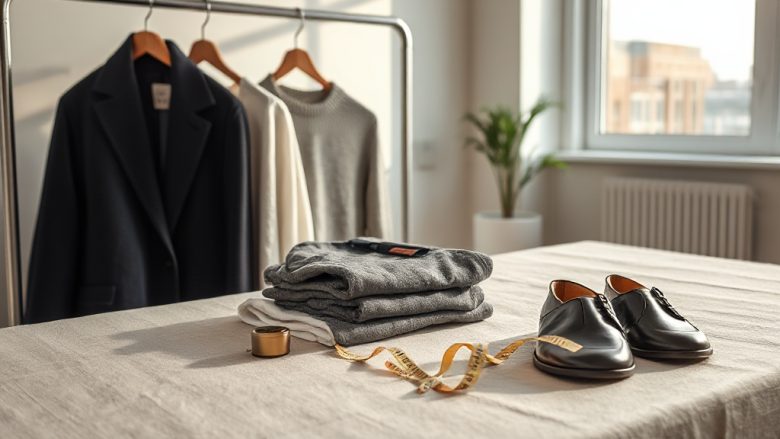
Spend on the pieces that carry everything else. That means a coat, a pair of shoes and a bag, because these are the items people notice first and the items that set the tone of an outfit. Spend on one well-fitting pair of trousers in a neutral colour, and on a jacket that actually closes. Spend on underwear that fits, because everything on top of it sits better when the base layer is not fighting back.
There is a middle ground worth naming too: knitwear and shirts. You do not need the most expensive version, but you do need one that holds its shape. A mid-range wool jumper beats a bargain one that pills after a fortnight.
Shoes deserve their own note. One decent pair of leather or suede shoes, kept clean and resoled when needed, will do more for a budget wardrobe than five pairs of cheap ones. Scuffed, collapsing shoes undo an otherwise good outfit faster than anything else.
Tailoring, care and the mistakes that cost you
A local alterations service is the best value in menswear and womenswear alike. Taking up a hem, tapering a leg or shortening a sleeve usually costs a fraction of the garment price and changes how the whole thing reads. Buy the size that fits your shoulders and hips, then pay a little to fix the length and the waist. That single habit makes inexpensive clothes look considered.
Care is the other half of cost per wear. Wash less often, at lower temperatures, and air things out between wears. Wool does not need washing after every outing; it needs a brush and a day on a hanger. Fold knits instead of hanging them so the shoulders do not stretch. Store shoes with a shape inside them. None of this costs money, and all of it extends the life of what you already own.
Learn one repair. Sewing a button and fixing a small seam takes ten minutes and saves a garment from the charity bag. A tailor can replace a zip or reline a jacket for far less than a replacement.
The common mistakes are consistent. Buying for a fantasy version of your life rather than the one you actually live. Chasing a trend at full price in week one. Buying three cheap versions of something instead of one good one. Ignoring the colours already in your wardrobe. Shopping without a list and coming home with a fourth black top when the gap was trousers. And treating fit as something you will sort out later, which in practice means never.
One short list is worth keeping: before you buy, check the shoulders, check the fabric in daylight, check it against two outfits you already own, and check the cost per wear. Four checks, thirty seconds, and most bad purchases disappear before they reach the till.
Frequently asked questions about dressing well on a budget
How many items do I actually need to look put-together?
Fewer than you think. A workable core is around twenty to thirty pieces that all share a colour palette: two pairs of trousers, a couple of skirts or jeans depending on your style, five or six tops, two layers, one coat, two pairs of shoes and a bag. The number matters less than the overlap. If everything matches everything, thirty pieces give you hundreds of outfits.
Is it better to buy cheap new clothes or quality secondhand?
Usually secondhand, as long as the fit is close and the fabric is sound. You get better materials for the same money, and the cost per wear drops immediately. The exception is anything heavily worn at the elbows, knees or underarms, since repairs there rarely look invisible. Check seams, linings and soles before you commit.
How do I stop buying things I never wear?
Keep a note of the gaps you notice while getting dressed, and only shop from that list. Add a waiting rule: if it is not on the list, wait a week. Most impulse buys lose their pull by then, and the ones that survive the wait are usually the ones you actually wanted.
Does tailoring really make a difference on inexpensive clothes?
Yes, and it is the fastest visible upgrade available. A hem taken up, a waist taken in or sleeves shortened changes the silhouette, and silhouette is what people read first. On a low-cost garment, the alteration can cost more than the item and still be worth it, because you will wear the result far more often.
Dressing well on a budget comes down to order of operations. Fix fit, choose fabric that holds up, build a palette that overlaps, then let cost per wear decide. Spend where the outfit is anchored, save where the trend lives, and pay a little for alterations and care. None of it requires a bigger budget. It requires buying in the right sequence.