7 Mistakes I Made Before Calling a Desentupidora Iguatemi São Paulo SP
When the drain in my kitchen started backing up, my first instinct was to grab a bottle of chemical cleaner and hope for the best. That was mistake number one. By the time I finally called a desentupidora Iguatemi São Paulo SP, I had already wasted a full day, made the clog worse, and spent money on products that never had a chance of working. If you are reading this because your sink, shower, or toilet is acting up, let me save you the trouble. Here is a day-in-the-life account of what I learned, written the way I would explain it to a friend over coffee.
I live in the Iguatemi area of São Paulo, and like most people here, I assumed a plunger and patience would solve everything. They did not. What I discovered is that a professional desentupidora is not just a last resort — it is often the fastest and cheapest path when you factor in the damage that DIY attempts can cause. Below are the seven mistakes I made, in the order I made them, so you can skip straight to the part where the problem actually gets fixed.
What I Got Wrong Before the Professionals Arrived
1. I Poured Chemical Drain Cleaner Down the Sink First
This is the most common mistake people make, and I made it twice. The label promises to dissolve hair and grease, but in practice those caustic liquids often just sit on top of the clog or eat away at the pipe walls without clearing the blockage. In older buildings around Iguatemi, the pipes are already fragile. Chemical cleaners can turn a simple clog into a leak, and then you are paying for pipe repair on top of desentupimento.
What I learned later is that a professional team uses mechanical methods — snakes, hydrojetting, and inspection cameras — to physically remove the obstruction. No chemical residue, no damaged seals, and the clog stays gone. If you have already poured something down the drain, tell the technician when you call. They will flush the line safely before starting work.
2. I Waited Until the Problem Became an Emergency
My shower drained slowly for about a week before it stopped draining at all. I kept telling myself it was nothing. Then sewage started bubbling up in the floor drain, and suddenly it was a Saturday night emergency. That is when I learned that a desentupidora Iguatemi offers 24-hour emergency service, but the call is much calmer — and often cheaper — when it is not a flood situation.
Slow drains, gurgling sounds, and faint smells are early warnings. A drain that drains slowly is already partially blocked, and the blockage will only grow. Calling when you first notice the symptom means the technician can work during normal hours, use less aggressive equipment, and charge a standard rate instead of an emergency premium. I now treat any slow drain as a same-week problem, not a wait-and-see.
3. I Tried to Fix It Myself With a Store-Bought Snake
After the chemicals failed, I bought one of those hand-crank drain snakes from a hardware store. It was too short to reach the actual clog, and I ended up pushing grease further down the line. The technician who finally came out showed me that the blockage was about eight meters in — far beyond what any consumer tool can reach. DIY snakes often make things worse by compacting the clog instead of pulling it out.
Professional equipment includes long motorized cables and high-pressure hydrojetting units that can clear the full length of the pipe. If you have already tried a snake and it did not work, do not keep forcing it. You risk scratching the inside of the pipe or breaking the cable off inside the drain, which turns a routine job into a major extraction.
4. I Called the First Number I Found Without Asking About the Service
My fourth mistake was panic-dialing. I called a random number from a search result, and the person who answered could not tell me whether they handled residential buildings or only commercial kitchens. They also could not give me a clear price range before showing up. That is a red flag. A reputable desentupidora em Iguatemi São Paulo SP will ask about your property type, the location of the clog, and whether it is sewage or clean water before dispatching a team.
When I finally called Desentupidora Suprema, the person on the phone asked precise questions: Was the backup in one fixture or several? Was there a septic tank on the property? Had anyone used chemicals? That conversation alone told me they knew what they were doing. Ask about the specific service you need — desentupimento, hydrojetting, or septic tank cleaning — and confirm they serve your neighborhood before you book.
5. I Did Not Clear Access to the Drain or Clean Up Beforehand
This one sounds small, but it cost me time and money. The main cleanout for my building was behind a stack of storage boxes in the utility area. The technician had to wait while I moved everything, and that delay was billed as part of the service call. Clear access to cleanouts and drains before the team arrives so they can start working immediately.
Also, if there is standing water or debris around the affected area, mop up what you can and move rugs or furniture out of the splash zone. Professionals bring protective covers, but they cannot work around obstacles you forgot to mention. A few minutes of prep on your end saves a surprising amount of time on theirs.
6. I Assumed the Problem Was Only in My Apartment
My unit is on the ground floor, so when the floor drain backed up, I thought it was my pipe. It turned out the blockage was in the building’s main line, shared by six apartments. If I had called a desentupidora for a single-unit fix, they would have cleared my branch and the problem would have returned within days. If more than one fixture is backing up, suspect the main line, not just your own plumbing.
This is especially important in condominiums around Iguatemi, where older buildings have shared sewage lines that collect grease and roots over time. A professional will inspect the main cleanout and may recommend hydrojetting for the entire line rather than a spot fix. Talk to your síndico or building manager before booking, because the responsibility and cost may be shared.
7. I Did Not Ask About Preventive Maintenance After the Fix
Once the drain was clear, I thanked the technician and went back to my routine. Big mistake. Six months later, the same kitchen line started slowing down again. The difference this time was that I knew what to do. I booked a preventive cleaning, and the technician showed me how grease and soap scum had already started rebuilding inside the pipe. A cleared drain is not a permanent fix without maintenance, especially in high-use kitchens and bathrooms.
Preventive service is cheaper than emergency service, and it keeps small buildups from becoming full blockages. For residential buildings, an annual inspection and cleaning of the main lines is a smart habit. For commercial kitchens, it may need to be quarterly. Ask the company what schedule they recommend for your property type and follow it.
What a Real Service Call Looks Like From Start to Finish
The Phone Call Sets the Scope
When I called Desentupidora Suprema the second time — this time for a preventive visit — the conversation was completely different from my panic call. The dispatcher asked what had changed since the last service, whether I had noticed any new smells, and what time of day the drain was slowest. That information helped them choose the right equipment before the truck even left. A good intake call narrows down the cause before anyone arrives, which saves diagnostic time on site.
They also confirmed the address and gave me a window for arrival. In a city like São Paulo, traffic can affect timing, so a realistic window is a sign of an organized operation. If a company promises an exact minute during rush hour, be skeptical. Ask for a range and plan to be home for it.
Inspection Before Any Work Begins
The team arrived in a marked truck with uniformed technicians. Before touching anything, they inspected the cleanout, ran water in multiple fixtures, and used a camera to look inside the line. This step is what separates a professional service from a guess-and-check approach. Camera inspection shows the actual condition of the pipe, including cracks, root intrusion, and grease buildup that a snake alone would miss.
Based on what they saw, they recommended hydrojetting for the main line and a mechanical snake for the branch under my sink. They explained the difference: hydrojetting uses high-pressure water to scour the pipe walls, while a snake cuts through the clog. For grease and scale, hydrojetting is usually the better choice. For a solid object or a tight bend, the snake may be needed first.
The Work Itself Is Fast and Contained
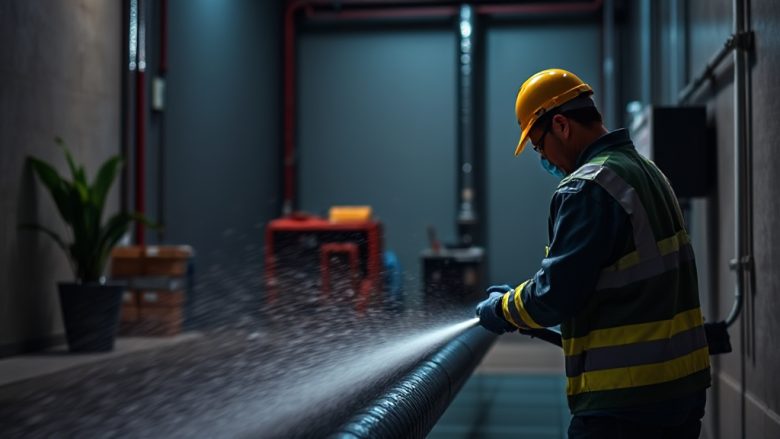
Once the equipment was set up, the actual clearing took less than an hour. The technicians laid protective mats, kept the work area contained, and flushed the line thoroughly afterward. They also checked the flow at every fixture to make sure the blockage was fully gone, not just moved. Containment and cleanup are part of the job, and a professional team will not leave you with a mess to handle.
I was surprised by how quiet and orderly the process was compared to my chaotic DIY attempts. There was no chemical smell, no water on the floor, and no guesswork. They showed me the camera footage before and after, which made the result tangible. That kind of transparency is worth asking for if you are comparing providers.
What It Costs and What Affects the Price
I will not pretend there is one flat rate, because the price depends on several factors. The type of service matters: a simple sink desentupimento costs less than hydrojetting a main line or cleaning a septic tank. Access matters too — a cleanout in an easy-to-reach utility area is cheaper than one that requires opening a wall. And timing matters: emergency calls at night or on weekends carry a premium.
| Service | Typical Use Case | What Affects the Price |
|---|---|---|
| Mechanical desentupimento | Single sink, shower, or toilet | Depth of clog, access point, time of call |
| Hydrojetting | Main lines, grease buildup, roots | Length of pipe, pressure needed, inspection |
| Septic tank cleaning | Properties with on-site tanks | Tank size, sludge level, disposal requirements |
| Emergency call-out | Backups outside business hours | Time of day, urgency, distance |
Ask for a written estimate before work starts, and confirm whether inspection and cleanup are included. A reputable company will explain the price range on the phone and adjust only if they find something unexpected, like a collapsed pipe or a clog in a hard-to-reach section. If a quote seems too low to be real, it probably is — hidden fees often appear after the work is done.
Why Local Knowledge Matters in Iguatemi
Iguatemi is not a uniform neighborhood. Some buildings are newer and have modern PVC lines, while others have older pipes that need gentler handling. A local desentupidora knows which streets have recurring root problems, which buildings share main lines, and how to navigate tight parking and service entrances. Local experience shortens the diagnostic process because the technician has seen your building type before.
That familiarity also helps with prevention advice. After my service, the technician pointed out that the grease trap in my building was undersized for the number of units and suggested a cleaning schedule. That is the kind of insight you only get from someone who works in the area regularly. It is not a sales pitch; it is practical maintenance guidance that saves money over time.
What to Do the Same Day You Notice a Problem
If I could go back and give myself one piece of advice, it would be this: do not wait, and do not improvise. The same day you notice a slow drain, a gurgling sound, or a bad smell, call a professional and describe the symptoms. Early action is the cheapest form of repair. You avoid emergency fees, chemical damage, and the risk of sewage backing up into your home.
Before you call, gather a few details: which fixtures are affected, whether the problem is in one room or several, whether there is a septic tank on the property, and whether anyone has used chemical products. Clear access to the cleanout if you can. Then book the service and let the team handle the rest. That is the day-in-the-life version of this story I wish I had read before my first mistake — and it is the one I now follow every time the drain starts to slow.